Cyberattacks are becoming more advanced every day, and organizations face a critical challenge: how do you protect your systems when security data is scattered across cloud services, networks, devices, and applications?
This is where SIEM comes in—a powerful tool that brings all your security information together in one place, making it easier to detect and respond to threats quickly.
In this guide, we'll explain what SIEM stands for and what it really means, how it works, and why it's essential for keeping businesses safe from cyber threats. You'll see how SIEM naturally fits into modern security operations and helps teams stay one step ahead of attackers. Let's start with the basics.
Table of Contents
What SIEM Stands For and What It Really Means
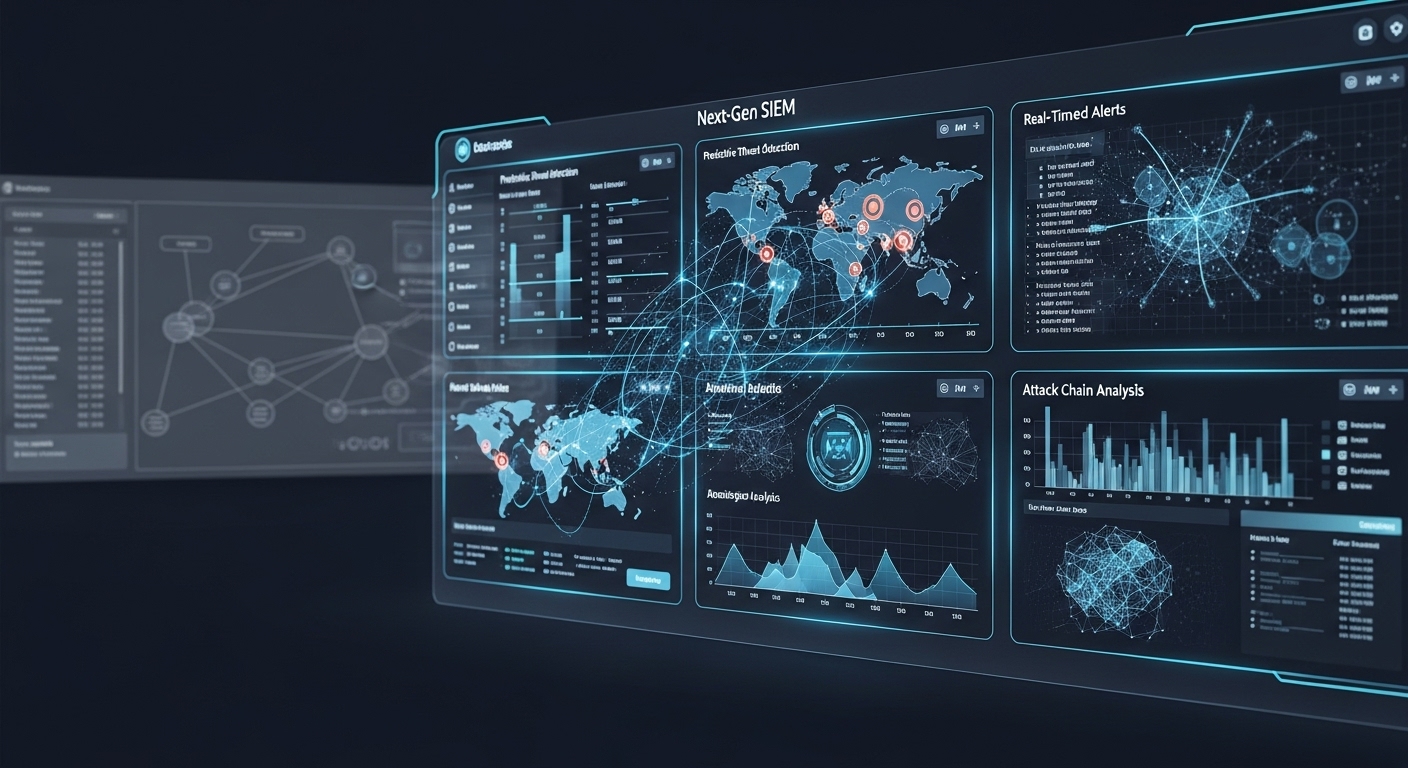
SIEM stands for Security Information and Event Management. It is a system that helps organizations collect, store, and analyze security data from all parts of their IT environment, including servers, networks, cloud services, applications, and endpoints. By bringing all this information together, SIEM enables better security monitoring, faster threat detection, and improved compliance reporting.
"Security Information" covers the collection, normalization, and retention of logs and telemetry. This includes transforming raw logs into a standard format, adding important details like user identity or asset criticality, and storing them for analysis, audits, or regulatory compliance.
"Event Management" focuses on real-time detection and response. It includes correlating events across systems, identifying unusual patterns, generating alerts, and supporting incident investigation. Event management helps security teams detect potential attacks quickly and take appropriate actions to reduce risk.
Modern SIEM platforms go beyond simple log storage. They incorporate advanced features such as:
- Threat intelligence to identify known malicious IPs, domains, or files
- User and Entity Behavior Analytics (UEBA) to detect unusual user or system activity
- Machine learning and anomaly detection for uncovering hidden risks
- Cloud-native designs for handling large and distributed data efficiently
These capabilities help reduce alert noise, prioritize important incidents, and provide actionable insights for security teams.
When evaluating options, it's helpful to compare leading SIEM tools and their specific capabilities to find the best fit for your organization's needs.
A SIEM system becomes the core of an organization's security operations, combining data from multiple sources, correlating events, enriching alerts with context, and supporting automated or manual response actions. It also aids in audit readiness, long-term log retention, and ongoing improvements in cybersecurity visibility and incident response.
Why SIEM Matters Today for Business and Security
Today's business and IT environments are more complex than ever. Cloud adoption, remote work, and a growing digital footprint have spread data and telemetry across devices, networks, cloud platforms, and applications. This makes it harder for organizations to monitor security, detect threats, and maintain compliance. Effective cybersecurity monitoring requires visibility across all systems, including endpoints, cloud services, and critical business applications.
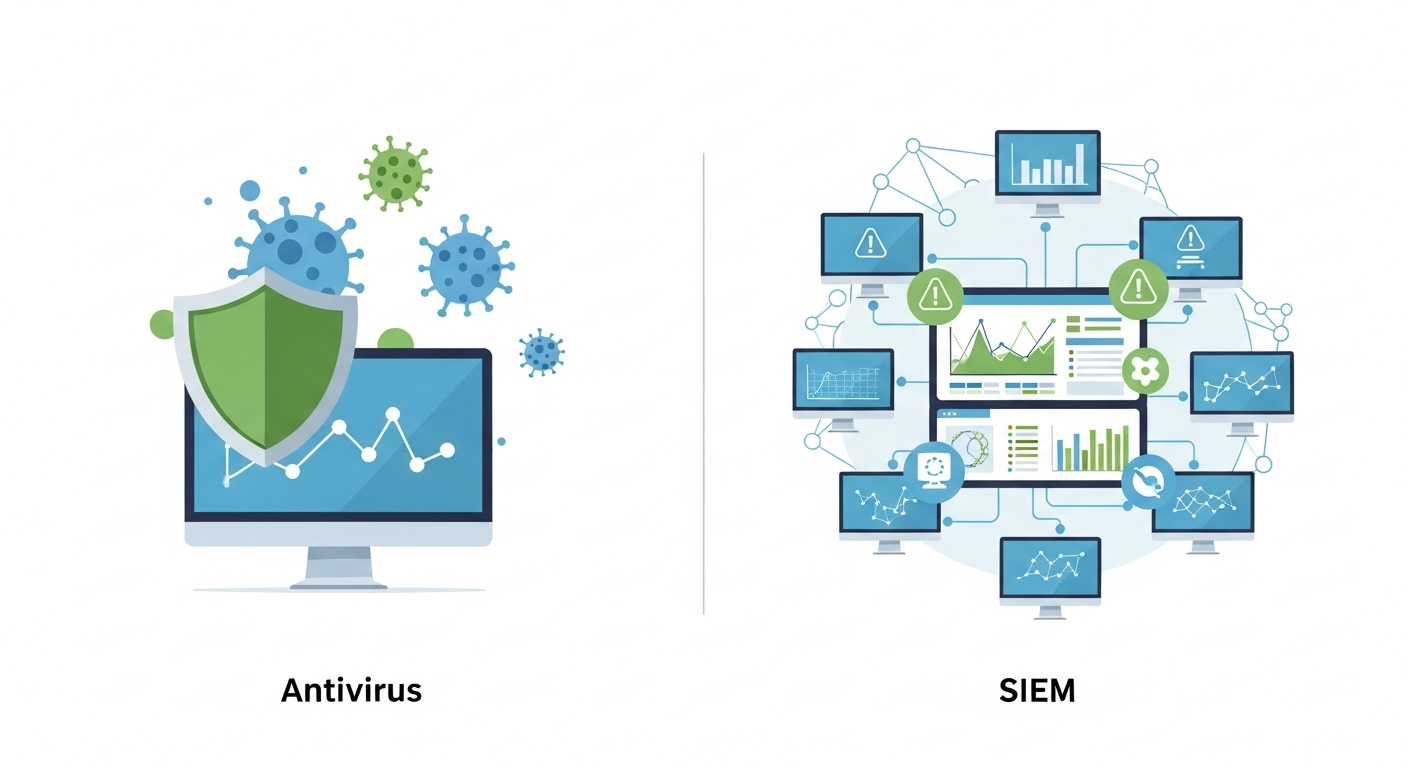
Sophisticated attackers often "live off the land," blending malicious activity with normal operations. Traditional security tools, manual log reviews, or isolated monitoring solutions often miss slow, multi-stage attacks, leaving businesses exposed to undetected breaches. Without proper monitoring, IT risk and operational blind spots can grow unnoticed, increasing the potential for costly incidents.
Visibility gaps can increase risks such as:
- Security breaches that remain undetected for long periods
- Regulatory violations under standards like GDPR, PCI, or HIPAA
- Operational blind spots that delay incident response and increase costs
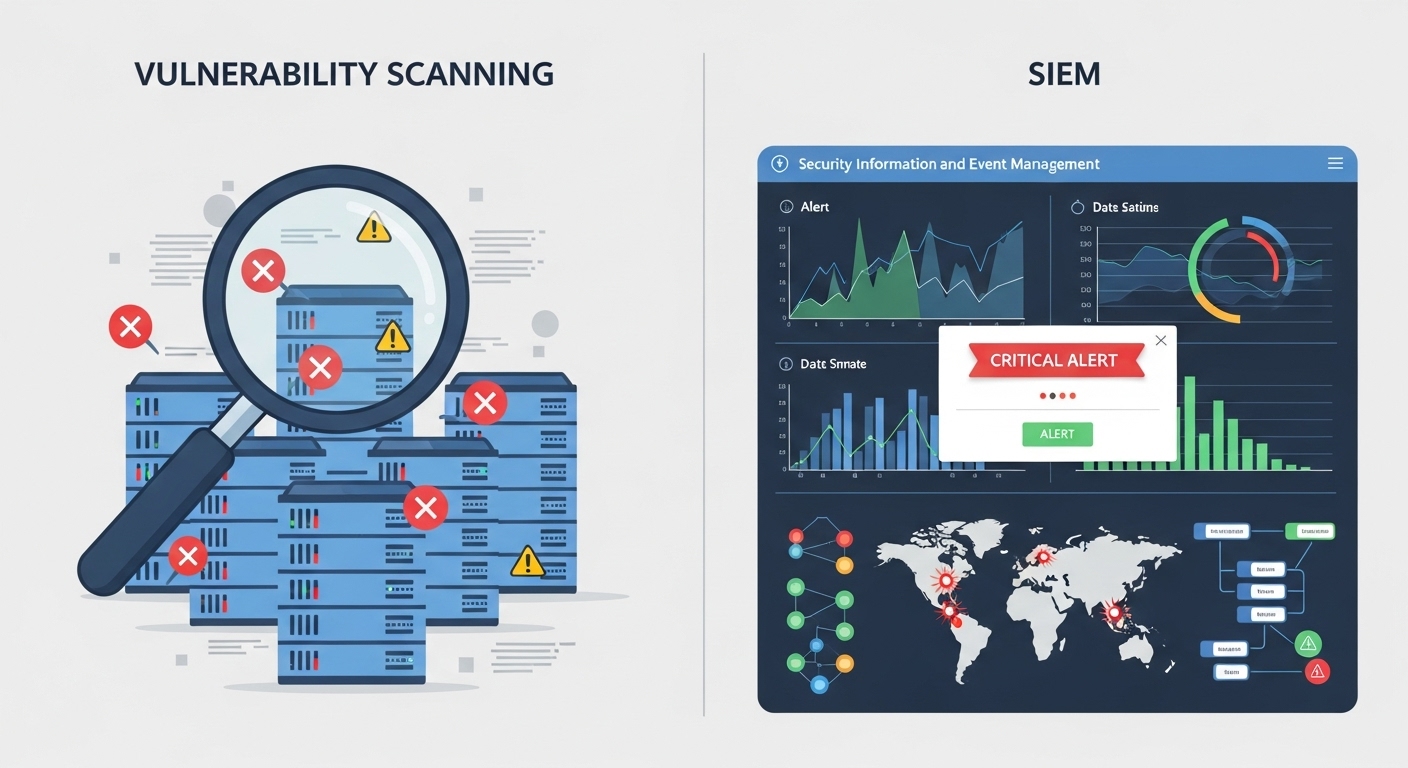
A properly deployed SIEM helps address these challenges by providing centralized log management, real-time monitoring, and event correlation. It allows organizations to detect unusual activity across networks, applications, and cloud services, prioritize alerts based on risk, and respond quickly to potential threats. SIEM also helps automate alert workflows and supports incident response planning, making security teams more efficient and effective. It ensures organizations maintain audit-ready reporting, simplifying regulatory compliance and reducing manual effort.
Beyond security, SIEM provides measurable business value, including improved incident response times, reduced operational downtime, and better governance. By giving teams full visibility into IT environments, it strengthens overall cybersecurity posture, lowers business risk, and supports strategic decision-making.
How SIEM Works in a Step by Step Pipeline
A SIEM operates as a step-by-step security pipeline that converts raw data into actionable insights for cybersecurity teams. The main steps are: collect → parse/enrich → store → correlate/analyze → alert/prioritize → investigate → respond/automate. Each step plays an essential role in threat detection, event correlation, incident response, and overall cybersecurity monitoring.
-
Data Collection and Ingestion
SIEM collects telemetry from a wide range of sources, including firewalls, proxies, endpoints, servers, cloud services (IAM, storage, VPC flow), identity providers, applications, databases, and IoT devices. Data is ingested using lightweight agents, syslog, APIs, cloud streaming connectors, or forwarders. Reliable collection and accurate time synchronization are crucial for precise event correlation and analysis. Collecting data from all critical systems ensures comprehensive security monitoring across the organization. This stage also captures user identity, device details, and network context to provide more accurate insights and faster threat detection.
-
Parsing, Normalization, and Enrichment
Raw logs come in many formats. The SIEM parses logs into standardized fields (timestamp, user, IP, action) so rules and searches can work across all sources. It also enriches the data by adding asset context, geolocation, user identity, and threat intelligence such as known malicious IPs or file hashes. Enrichment helps security teams identify risks faster, reduce false positives, and prioritize high-impact events. Proper parsing and normalization also support regulatory compliance and efficient reporting, making audits easier.
-
Storage and Retention
Logs are stored in different tiers—hot, warm, or cold storage—to balance speed and cost. Parsed fields are often indexed for quick searching, while raw logs are preserved for forensic analysis. Retention policies must comply with regulations and support investigations. Proper storage ensures audit readiness, long-term cybersecurity visibility, and historical analysis for threat hunting. Well-managed storage also reduces costs and ensures critical data is available when needed for compliance or security investigations.
-
Correlation and Analytics
The SIEM links related events into incidents using rule-based correlation, scheduled searches, or machine learning and UEBA for anomaly detection. This helps identify threats such as unusual logins, lateral movement, or suspicious system behavior. Correlation reduces alert fragmentation and highlights high-risk security events. Analytics also allow teams to identify recurring patterns, uncover hidden threats, and improve proactive threat detection across the environment.
-
Alerting and Prioritization
Alerts are scored using contextual metadata such as asset value, user role, and threat confidence. Prioritization ensures analysts focus on the most critical incidents, reducing noise and improving efficiency. SIEM often provides suggested playbooks or remediation steps to guide investigation and response. Proper alerting allows teams to act quickly on urgent threats while maintaining oversight of lower-risk activity, improving overall incident response times.
-
Investigation and Case Management
SIEM platforms provide investigation workspaces with timelines, pivot searches, entity views, and evidence export. Case management tracks incident status, assignments, and audit trails, helping security teams analyze incidents thoroughly. It also supports lessons learned and continuous improvement by storing historical incident data. Teams can use this information to update detection rules, refine alerts, and strengthen cybersecurity processes over time.
-
Response and Automation
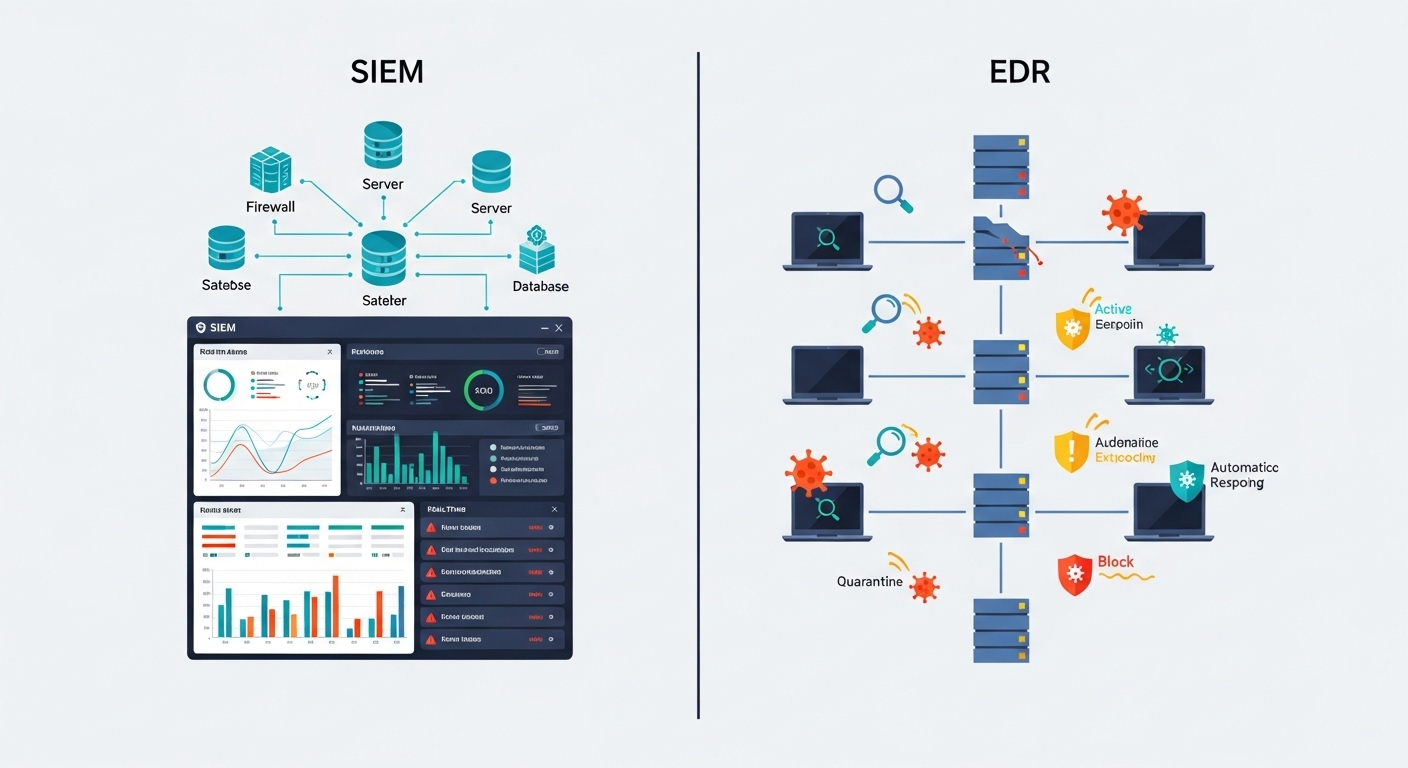
Integration with SOAR, EDR, firewalls, and ticketing systems allows automated containment, such as isolating hosts or blocking malicious IPs. Human oversight remains for complex cases. Automated workflows and integrations ensure faster response, reduced dwell time, and consistent security enforcement. Continuous monitoring and automation also help prevent the spread of threats and reduce manual workload for analysts, improving operational efficiency.
Example: If an attacker compromises credentials and performs unusual privileged actions from a foreign IP, the SIEM ingests authentication logs, enriches them with geo/asset context, correlates failed logins and successful privileged activity, and raises a high-priority case. Suggested containment actions, like disabling the account and isolating the session, help security teams respond quickly, minimize risk, and prevent further damage. The SIEM also maintains detailed records for audits, post-incident analysis, and future threat prevention.
Core Components and Architecture Options
A SIEM platform consists of several core components that work together to provide centralized security monitoring, threat detection, and incident response. Each component ensures that organizations can collect, analyze, and act on security data effectively while supporting compliance and operational efficiency.
Key Components:
-
Collectors and Forwarders
Gather telemetry from servers, endpoints, networks, cloud services, and applications. They ensure continuous data collection for accurate visibility across the IT environment. Collectors also validate data integrity and ensure no critical events are lost. They provide real-time ingestion, which is essential for timely threat detection and analysis.
-
Normalization and Enrichment Layer
Converts raw logs into standardized formats and adds contextual information, such as asset criticality, user identity, geolocation, and threat intelligence. This makes alerts and reports more actionable and helps teams understand the severity and potential impact of each event. Enriched data also supports faster investigations and better prioritization of security alerts.
-
Indexing and Storage
Stores logs efficiently using hot, warm, or cold tiers to balance search speed, cost, and long-term retention. Indexed fields allow fast queries, forensic analysis, and historical trend detection. Well-structured storage ensures audit readiness, compliance with regulations, and availability of historical telemetry for threat hunting. It also helps reduce storage costs while maintaining high visibility into critical events.
-
Correlation and Analytics Engine
Connects related events using rules, scheduled searches, machine learning, and UEBA to detect anomalies and high-risk activity. This engine converts raw logs into actionable security intelligence, helping teams focus on the most important threats. Analytics also provide insights into emerging threats and recurring patterns, improving proactive threat detection and risk mitigation.
-
Dashboards and Reporting
Provide SOC analysts and executives with clear visualizations of security posture, compliance metrics, and incident trends. Dashboards enable real-time monitoring and performance tracking, supporting informed decision-making. They also allow teams to measure KPIs like detection times, incident volumes, and system coverage, which improves overall security governance.
-
Investigation Workspace and Case Management
Helps security teams track incidents with timelines, pivot searches, entity views, and evidence export. Case management records assignments, status updates, and audit trails for full accountability. It also supports post-incident analysis and continuous improvement, helping refine detection rules and improve operational efficiency.
-
Integration and Automation Layer
Connects SIEM with SOAR, EDR, firewalls, and ticketing systems to automate containment and remediation, reducing dwell time. Automation ensures consistent enforcement of security policies and allows teams to focus on high-priority threats. Continuous integration improves incident response speed and reduces manual effort across the SOC.
Deployment Options:
-
On-Premises Appliances
Provide full control over data location, security policies, and infrastructure. Suitable for organizations with strict data residency or regulatory compliance requirements. On-prem deployments also allow custom configuration of log sources and correlation rules.
-
Cloud-Native SaaS
Scalable, low-maintenance solution with flexible log ingestion. Ideal for organizations that need fast deployment, easy scaling, and reduced operational burden. Cloud SIEM also supports centralized monitoring across distributed environments.
-
Hybrid
Combines local collection with cloud analytics for a balance of control, performance, and scalability. Sensitive data can remain on-prem while leveraging cloud resources for analytics and storage. Hybrid deployments also allow gradual adoption of cloud-based SIEM without disrupting existing operations.
-
Managed SIEM
Provided by MSSPs or co-managed SOCs, giving organizations expert monitoring without a full in-house team. Managed SIEM includes continuous tuning, alert optimization, and ongoing reporting to improve detection and response efficiency.
What Drives Architecture Choices: Architecture decisions depend on data gravity, residency requirements, regulatory compliance, staffing capabilities, and budget. Organizations should also monitor scalability and per-GB ingestion costs, as unexpected fees can increase total cost of ownership (TCO). The right architecture ensures efficient log management, actionable analytics, and reliable security monitoring. It also supports long-term cybersecurity strategy, compliance readiness, and continuous improvement of security operations.
Conclusion
In conclusion, yes—SIEM is essential for modern cybersecurity. Security Information and Event Management brings all your security data together in one place, making it easier to spot threats quickly, respond to incidents faster, and meet compliance requirements.
SIEM works by collecting security logs from all your systems, adding helpful context to make sense of them, connecting related events to find real threats, and highlighting what needs your attention most. This turns scattered information into clear insights that help you catch attacks that other tools might miss.
As cyberattacks get smarter and businesses use more cloud services and remote work, you need to see what's happening across all your devices, networks, and applications. SIEM gives you that complete view while cutting down on unnecessary alerts and helping you stay compliant with regulations like GDPR, PCI, and HIPAA.
Don't wait for a security breach to take action. Start exploring SIEM solutions today and take the first step toward building stronger defenses for your organization. Your future security depends on the decisions you make now.